
The UK housing sector is facing increasing pressure to improve indoor air quality and address damp and mould issues. A major driver behind this shift is Awaab’s Law, legislation introduced following the death of Awaab Ishak in 2020 due to prolonged exposure to mould in social housing. The law began rolling out in October 2025 and places stricter obligations on housing providers to investigate and resolve health-related housing hazards within defined timeframes.
While the legislation is primarily aimed at improving living conditions and protecting residents, it is also influencing how ventilation, indoor air quality, and smart building technologies are designed and deployed. For manufacturers operating in these sectors, Awaab’s Law is creating new opportunities for product innovation and market growth.
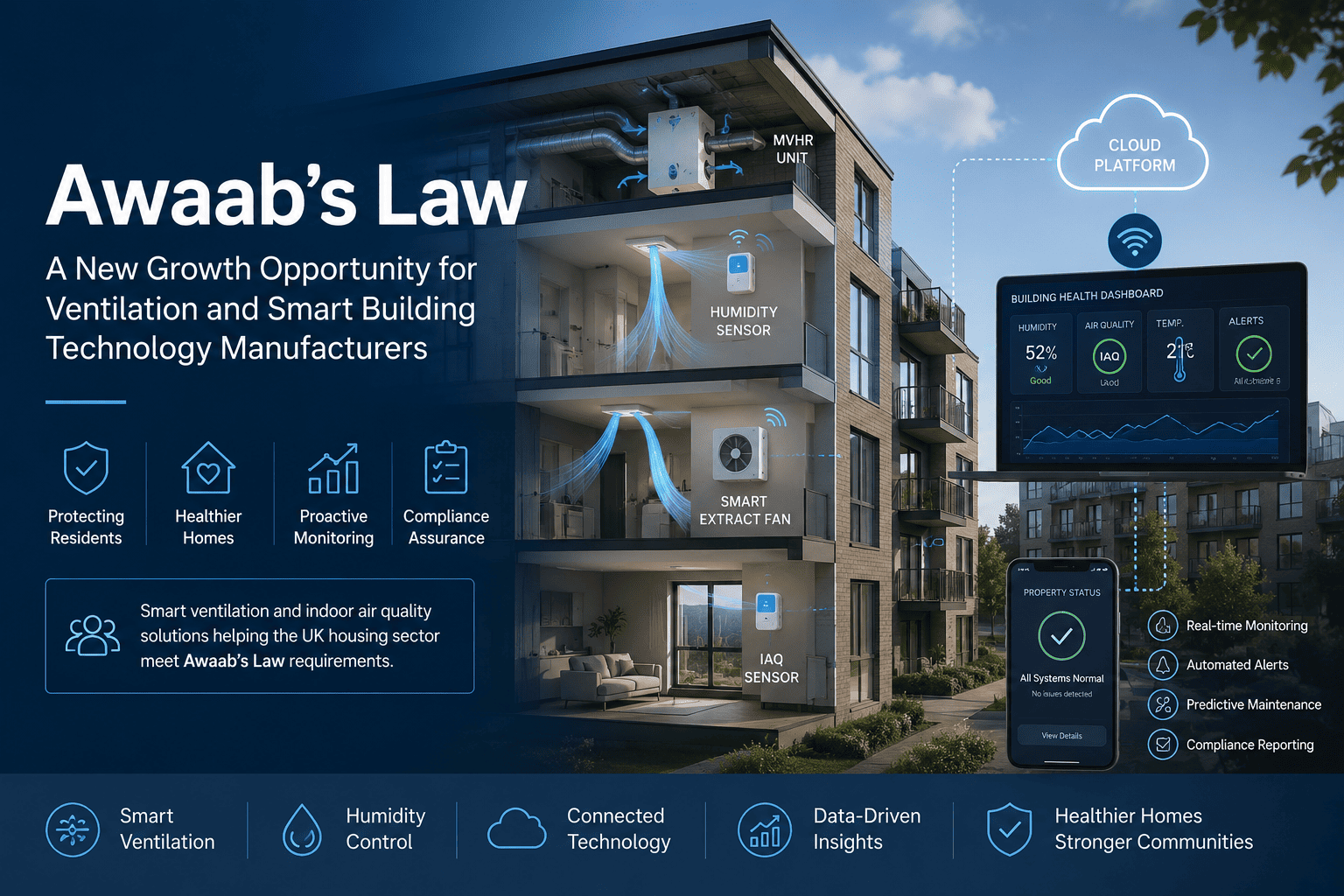
Damp and mould are often symptoms of poor ventilation, excess humidity, and inadequate air circulation. As housing providers work to meet stricter standards, demand is increasing for solutions that help prevent these issues before they become serious health risks.
Key technologies gaining attention include:
Rather than relying solely on reactive maintenance, housing providers are increasingly investing in technologies that support proactive monitoring and prevention.
Modern ventilation systems are evolving beyond standalone equipment. Customers are seeking intelligent solutions capable of providing real-time visibility into building conditions.
This shift is driving demand for products that combine ventilation performance with sensing, connectivity, and data analytics capabilities. As housing providers seek greater visibility into indoor environmental conditions, connected technologies are becoming an important part of long-term compliance strategies.
Key capabilities include:
These features help landlords and housing associations identify potential problems early while maintaining records that support regulatory compliance.
As market expectations rise, manufacturers face increasing pressure to accelerate innovation while maintaining product quality and reliability.
Common challenges include:
Achieving this often requires expertise across embedded electronics, firmware, connectivity, cloud platforms, mobile applications, validation, and regulatory compliance. For many manufacturers, accelerating innovation while maintaining product reliability has become a key business challenge.
Manufacturers that can rapidly adapt their products to meet these emerging requirements are likely to gain a competitive advantage.
Meeting the growing demand for smarter ventilation and monitoring solutions often requires expertise across multiple engineering disciplines, including embedded electronics, firmware, cloud software, IoT connectivity, validation, and testing.
Companies developing next-generation ventilation products must balance innovation with reliability, compliance, and cost considerations. Partnering with an experienced product engineering organization can help accelerate development while reducing technical and project risks.
Alpha ICT works with product companies across HVAC, industrial, and connected device markets, supporting initiatives such as:
By combining expertise across electronics, software, connectivity, and validation, manufacturers can bring innovative products to market faster while addressing evolving industry requirements.
Awaab’s Law represents more than a regulatory change. It is accelerating the adoption of smarter ventilation, monitoring, and building management technologies across the UK housing sector.
For ventilation and HVAC manufacturers, the shift creates an opportunity to develop connected, data-driven products that improve indoor air quality, support compliance, and deliver healthier living environments. As ventilation products evolve to include sensing, connectivity, and intelligent monitoring capabilities, manufacturers that invest in product innovation and digital technologies will be better positioned to capitalize on the opportunities created by this regulatory shift.