

Enhanced Security & Identity Assurance

Contactless & User-Friendly Experience

Seamless Integration with IoT Systems

Customizable Authentication Mix
As organizations accelerate digital transformation, access control has evolved from simple mechanical locks to intelligent, sensor-driven authentication frameworks. Security, compliance and user experience now converge in modern infrastructure expectations. This shift is propelled by rapid advancements in biometrics, contactless technologies and adaptive authentication – backed by a global market that is expanding at a record pace.
The biometric systems market was valued at USD 33.18 billion in 2023 and is projected to reach USD 113.22 billion by 2032, highlighting the growing importance of authentication innovation in physical security. Meanwhile, the physical access control (PAC) market is expected to grow from USD 10.8 billion in 2024 to USD 17.5 billion by 2033, driven by enterprise modernization and the increasing demand for robust identity assurance.
In this landscape, Alpha ICT enables OEMs and enterprises to modernize with engineering-driven authentication solutions. From embedded electronics to cloud-enabled access software, our teams help customers deploy secure, flexible, future-ready systems tailored for global use cases.

Fingerprint
Fingerprint technology remains one of the most trusted biometric methods due to its accuracy and ease of use. The system captures unique fingerprint patterns, converts them into digital templates, and matches them during each access attempt.
Designing an effective fingerprint-based solution involves optimizing sensor placement, accuracy (FAR/FRR), response speed, and durability — particularly for industrial and outdoor use cases.
CapSense (Capacitive Sensing)
CapSense technology enables touch-based authentication and input, detecting the electrical characteristics of the human body. It offers an intuitive interface that’s durable and low-power, ideal for smart locks and industrial panels.
Compared to mechanical buttons, CapSense improves product longevity and allows seamless integration into sleek, sealed designs that resist dust and moisture.
RFID (Radio Frequency Identification)
RFID uses electromagnetic fields to identify and track cards, tags, or fobs linked to users. It’s widely used in offices, factories, and logistics hubs due to its speed and reliability.
From low-frequency proximity cards to high-frequency smart cards, RFID systems offer scalable options based on security level and read range. However, ensuring encryption and anti-cloning protection remains essential.
NFC (Near Field Communication)
NFC builds upon RFID but operates at shorter distances, enabling secure, contactless communication between smartphones and readers. It’s particularly effective for credential-based access and temporary permissions, allowing administrators to manage access via mobile apps.
Its compatibility with digital identity ecosystems makes NFC a preferred choice for hybrid workplaces.
Face Recognition
Face recognition systems leverage AI-driven image processing to identify users through facial features. With advances in 3D imaging and deep learning algorithms, these systems deliver fast and contactless authentication even in variable lighting.
They’re increasingly used in high-traffic or high-security environments such as corporate campuses, healthcare facilities, and manufacturing plants.
There’s no one-size-fits-all approach. The ideal authentication setup depends on use case, environment, security requirements, and user convenience.
A balanced design often combines multiple technologies like biometrics for identity accuracy, RFID/NFC for convenience, and CapSense for intuitive control interfaces.
With deep expertise in embedded electronics, IoT and communication protocols, Alpha ICT helps product companies identify the ideal authentication blend and optimize hardware–software integration by covering every stage from appropriate sensor selection and PCB design to firmware development, protocol design, and system validation.
At Alpha ICT, we partner with product companies to design and develop intelligent access control systems from concept to field deployment.
Our core strengths include:
With experience across Fingerprint, CapSense, RFID, NFC, and Face Recognition, we enable OEMs to accelerate time-to-market and deliver differentiated products that meet global standards.
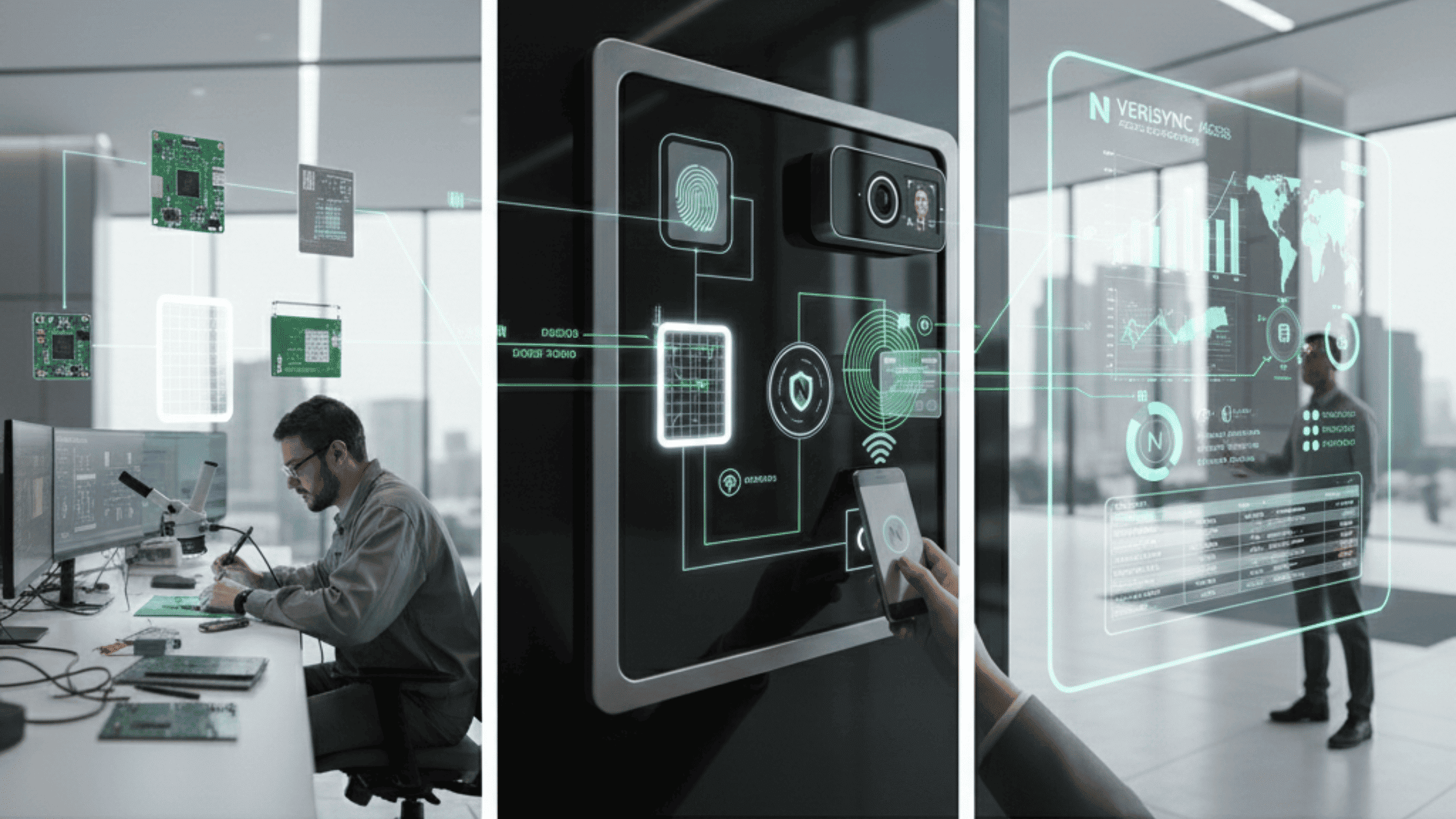
Authentication is rapidly moving toward AI-assisted, multi-sensor, and context-aware ecosystems. The convergence of embedded electronics, biometrics, IoT and edge computing will redefine identity and access management across industries.
Alpha ICT continues to enable this transformation by providing end-to-end electronic product design and development services. We help clients innovate, scale and remain at the forefront of the evolving security landscape by delivering secure, intelligent and future-ready systems.