
Laboratories today are undergoing a structural transformation driven by automation, data intensity, and regulatory pressure. The global lab automation market alone is projected to grow from ~USD 8.27 billion in 2024 to ~USD 18.39 billion by 2033, reflecting a strong shift toward intelligent and connected lab ecosystems.
This growth is not just about scaling operations—it is about redefining how lab instruments function. Automated systems are already enabling up to 50% higher throughput and significantly reducing human error, making manual and semi-automated workflows increasingly inefficient.
At the same time, laboratories are expected to handle high-throughput sample processing, maintain strict reproducibility, and comply with evolving regulatory frameworks. Modern systems are also integrating AI, analytics, and cloud connectivity, enabling real-time monitoring and predictive insights.
However, traditional instrument architectures struggle to keep up. They often lack deterministic control, seamless connectivity, and scalability. The result is operational inefficiencies, inconsistent outputs, and limited ability to integrate into digital ecosystems.
This creates a critical gap:
How can lab instruments simultaneously deliver precision, real-time responsiveness, and connectivity?
The answer lies in advanced embedded controller architecture.
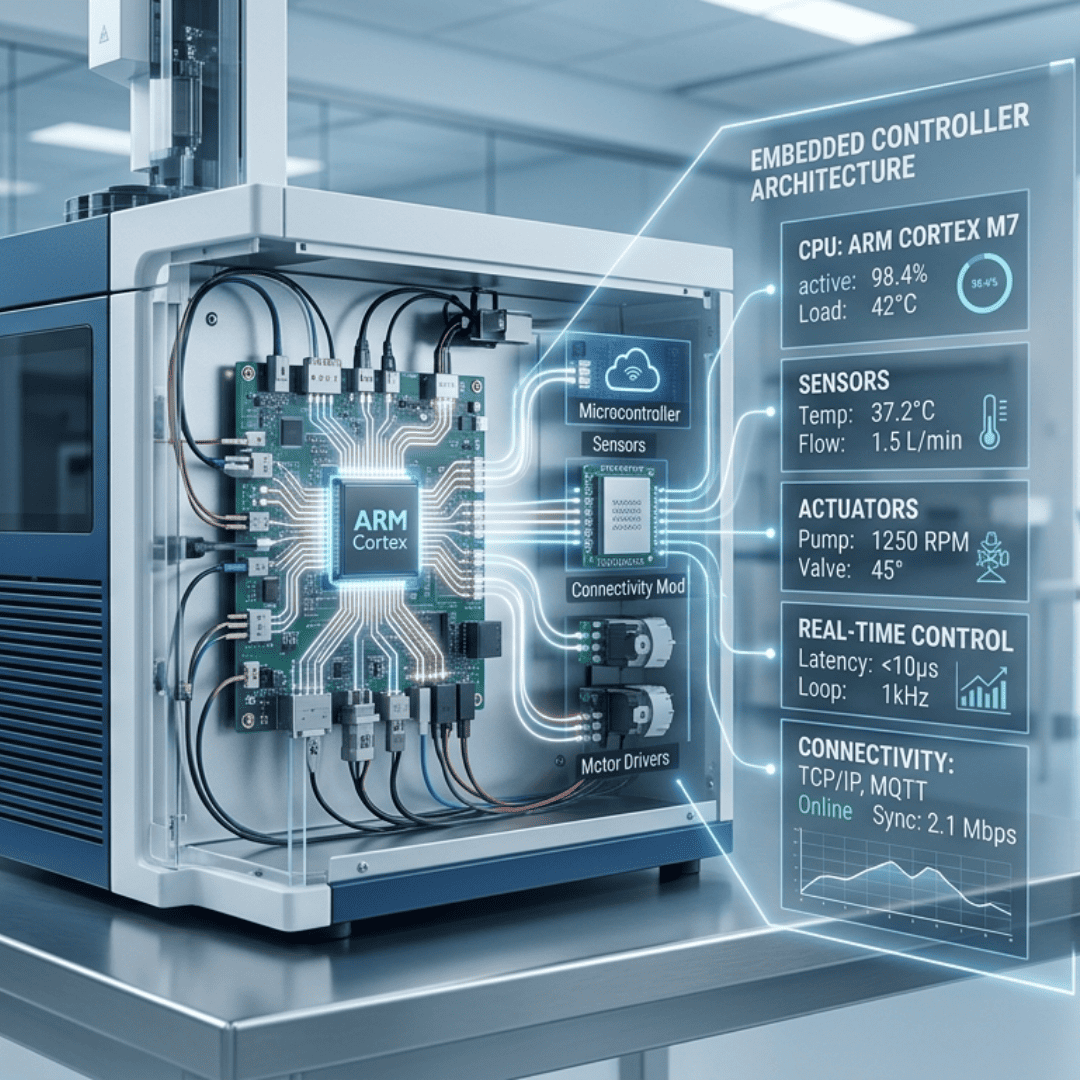
Modern lab instruments rely on a hybrid architecture combining microcontrollers (MCUs) and single-board computers (SBCs).
At the core of lab instruments is the ability to execute highly precise operations. This includes:
Firmware acts as the intelligence layer enabling:
The use of real-time operating systems (RTOS) ensures deterministic performance, which is essential for mission-critical lab applications.
User interaction is no longer an afterthought. Modern instruments feature:
Lab instruments are now part of a broader digital ecosystem. This requires:
Connectivity transforms instruments into data-driven assets rather than standalone devices.
To meet industry standards, embedded architectures must support:
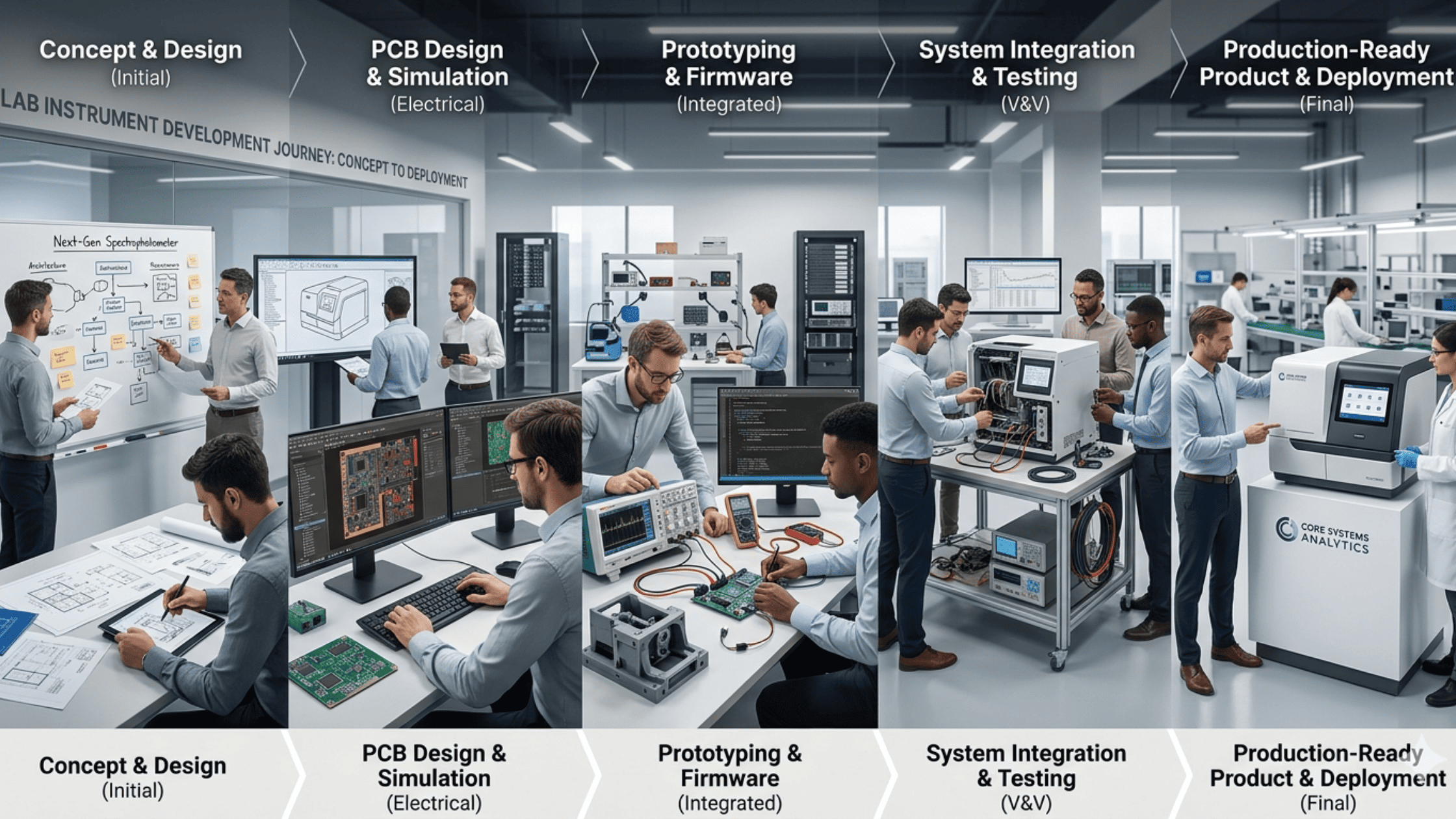
Modern lab instruments are evolving from standalone devices into connected, intelligent systems. To stay competitive, manufacturers must adopt scalable, platform-driven architectures that enable faster upgrades, better integration, and long-term adaptability.
Equally critical is an integrated engineering approach, where embedded systems, software, and mechanical design work in sync to deliver reliable, high-performance outcomes.
Ultimately, future-ready instruments are those that combine precision, real-time control, and seamless connectivity, ensuring they can adapt to evolving lab demands and digital ecosystems.