

Enhanced User Experience
Design Flexibility & Aesthetic Appeal
Cost Optimization Over Product Lifecycle
Future-Proof Product Design
As healthcare delivery continues its strategic shift from hospitals to homes, medication management has emerged as a critical operational and clinical challenge. For device manufacturers and product leaders, this is no longer a peripheral issue — it sits at the intersection of patient safety, user experience, and digital health innovation.
Medication non-adherence remains a persistent global concern. According to the World Health Organization, only about half of patients with chronic conditions in developed countries follow treatment recommendations as prescribed.
At the same time, demographic pressures are intensifying the problem. The United Nations projects that the global population aged 65 and above will more than double by 2050.
For product manufacturers and healthcare technology providers, these trends translate into clear market signals:
Traditional pill organizers and manual reminder systems are increasingly insufficient in this evolving care paradigm. The industry is now moving toward intelligent, connected medication management systems that reduce human dependency and improve adherence outcomes.
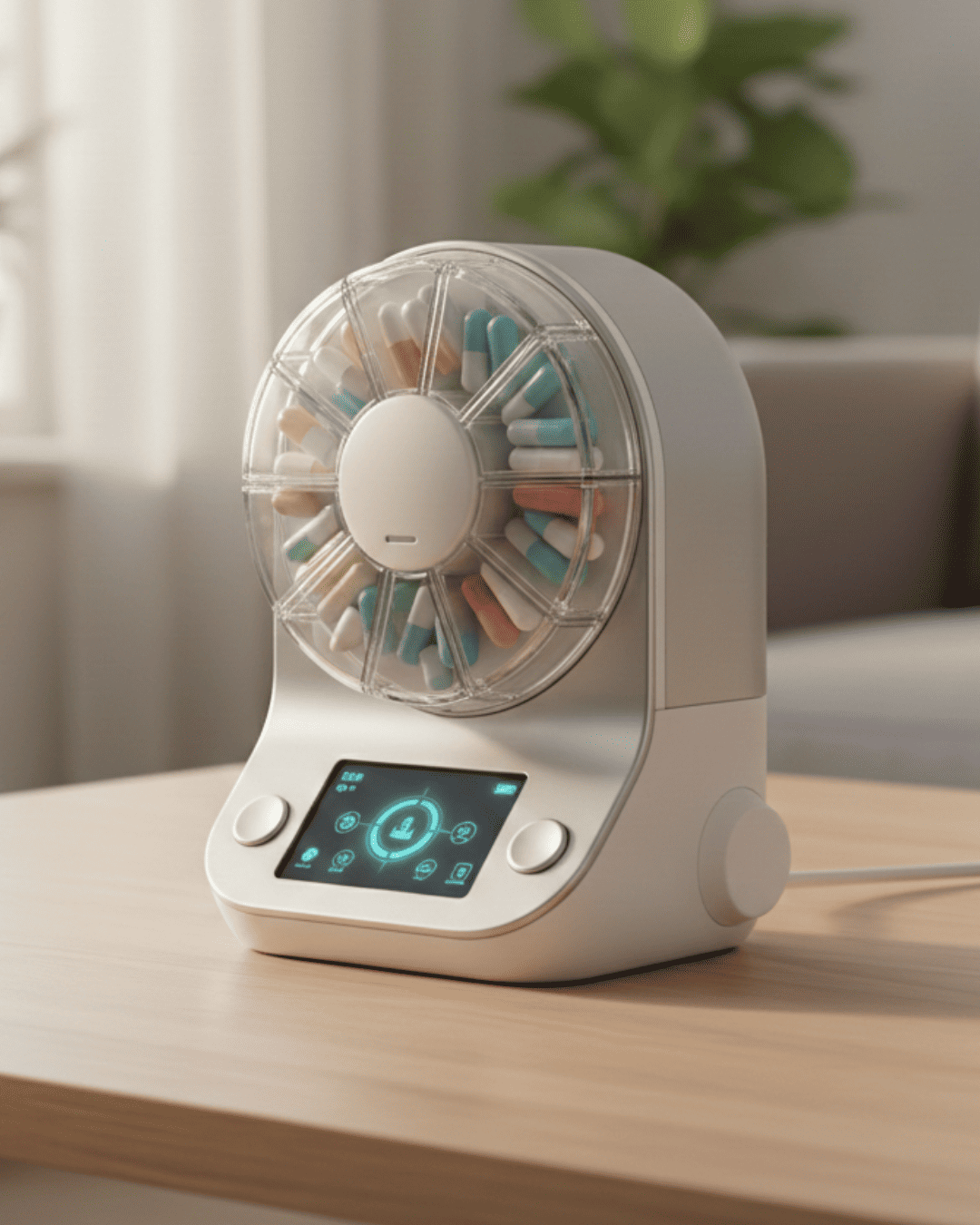
Smart medication dispensers are rapidly gaining traction as part of the broader digital health and home healthcare ecosystem. These systems combine embedded electronics, mechanical automation, and connected software to deliver precise, time-based medication dispensing.
From an engineering standpoint, modern dispensers typically integrate:
A recent development initiative by Alpha ICT LLP offers a practical illustration of how these industry directions are translating into engineered solutions. The project focused on designing an automatic pill dispenser tailored for home healthcare use cases, where reliability, ease of use, and configurability were key priorities. The objective was not merely to automate dispensing but to create a flexible platform that manufacturers could adapt across multiple product variants.
At the core of the device is a motor-driven paddle wheel mechanism that manages the pill dispensing compartment. An embedded controller governs the dispensing logic, while a real-time clock maintains precise scheduling. When the programmed time is reached, the system rotates the compartment until the medication is dispensed into an accessible tray.
To enhance user interaction, the design incorporates an ePaper display for time and status visibility, supported by buzzer and LED alerts for both audible and visual notifications. The architecture also accommodates mobile app connectivity for remote reminders and includes an on demand dispense function via a user button.
Importantly, the platform was engineered with customization in mind. Supported pill sizes, alert behaviors, physical form factor, and firmware logic can be adapted based on target market requirements — a capability that is increasingly valuable for manufacturers serving diverse home healthcare segments.
The dispenser is supported by a cloud-based medication management portal that enables scheduling of pill dispensing, refill alerts, non-usage alerts, and tampering notifications.
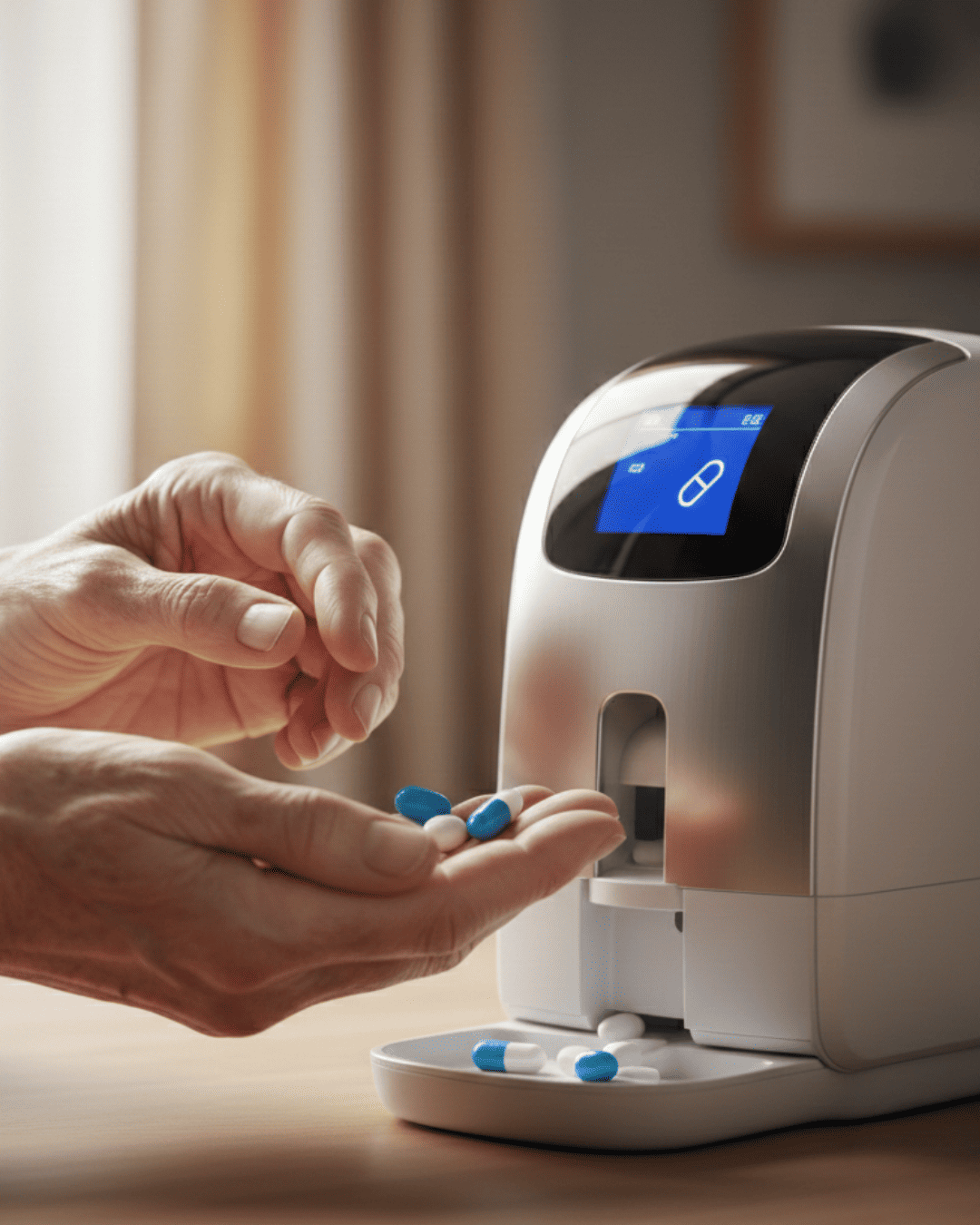
The trajectory of medication management technology is clearly pointing beyond standalone dispensers. Over the next several years, the category is expected to converge more tightly with data analytics, cloud-connected care platforms, and predictive health workflows.
Future systems are likely to incorporate adherence intelligence, anomaly detection, voice-assisted interfaces, and deeper integration with electronic health records. Edge processing and secure connectivity will play a growing role as devices are expected not only to dispense medication but also to generate actionable health insights.
For manufacturers and product strategists, the window of opportunity is open but narrowing. The organizations that will lead this space are those investing today in modular embedded architectures, human-centric design, and connectivity-ready platforms that can evolve alongside the broader digital health ecosystem.
In the shift toward home-centered care, smart medication dispensers are quietly becoming foundational infrastructure. The question for device makers is no longer whether automation belongs in medication management — but how intelligently and reliably it can be engineered for the realities of care at home.